Vera Rubin Observatory’s First Image Unveils Milky‑Way‑Scale Tidal Tail in Barred Spiral Galaxy Messier 61
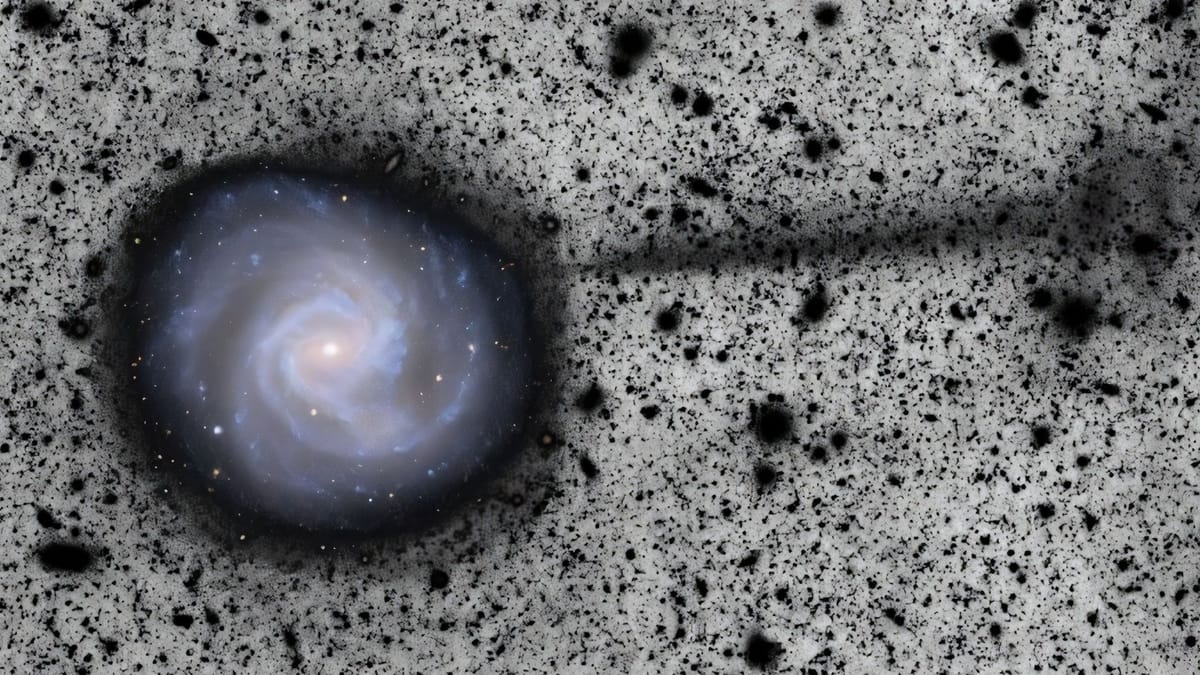
The Vera Rubin Observatory released its inaugural public image on October 28, 2025, showcasing the barred spiral galaxy Messier 61 (NGC 4303), located roughly 55 million light‑years away in the constellation Virgo. The high‑resolution composite not only highlights the galaxy’s bright central bar and spiral arms but also reveals a faint, elongated structure extending far beyond the main disk, comparable in length to the Milky Way’s own span.
Scientists identify the faint extension as a tidal tail – a stream of stars and interstellar material pulled from the galaxy during a past gravitational encounter with a neighboring companion. Its length, estimated at about 100,000 light‑years, suggests a relatively recent interaction that has reshaped Messier 61’s outer regions. The tail’s low surface brightness became detectable only thanks to the observatory’s wide‑field, deep‑exposure capabilities, which can capture diffuse features that elude smaller telescopes.
The Vera Rubin Observatory, home to the 8.4‑meter Simonyi Survey Telescope, is designed to conduct the Legacy Survey of Space and Time (LSST), a ten‑year program that will image the entire southern sky repeatedly. The observatory’s rapid survey cadence and unprecedented sensitivity enable astronomers to detect transient events and subtle structures alike. This first released image, part of the “Space Photo of the Week” series, demonstrates the facility’s potential to transform our understanding of galaxy formation and evolution by providing a continuous, detailed view of the dynamic universe.
Astrophysicists and galaxy‑evolution experts have welcomed the discovery, noting that such tidal features are key evidence of hierarchical growth, where galaxies grow through mergers and interactions. Generic statements from the scientific community emphasize that observing these structures across many systems will help refine models of dark‑matter distribution and star‑formation histories. The Vera Rubin Observatory’s ongoing survey is expected to uncover countless similar features, offering a statistical foundation for future research and reinforcing the observatory’s role as a cornerstone of modern astronomy.