Study Finds Dark Matter Behaves Like Ordinary Matter Under Gravity
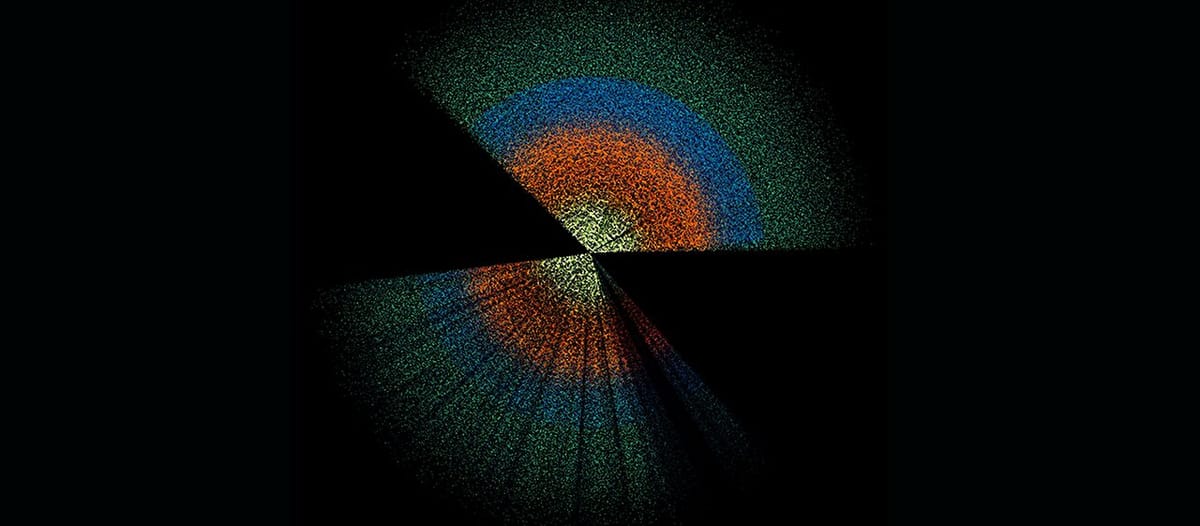
A collaborative team of astrophysicists from several international institutions has published new results indicating that dark matter does not violate the known laws of gravity. Using a combination of high‑resolution galaxy rotation data and sophisticated computer simulations, the researchers demonstrated that the distribution of dark matter in a sample of spiral galaxies aligns closely with predictions made by Newtonian and Einsteinian gravity, just as ordinary (baryonic) matter does.
The finding addresses a long‑standing question in cosmology: whether the invisible substance that makes up roughly 27% of the universe’s mass‑energy budget follows the same gravitational rules as the matter that forms stars, planets, and gas clouds. Since its initial proposal in the 1930s, dark matter has been inferred primarily from its gravitational effects, yet alternative theories such as Modified Newtonian Dynamics have suggested that gravity itself might behave differently on galactic scales. By confirming that dark matter adheres to the same gravitational framework, the study strengthens the conventional dark‑matter paradigm.
Scientists not directly involved in the work have welcomed the results while urging caution. Several experts noted that the analysis relied on well‑understood observational techniques but emphasized the need for larger, more diverse data sets to rule out systematic biases. Industry analysts also pointed out that the conclusion could influence the direction of upcoming research funding, shifting focus toward particle‑physics searches for dark‑matter candidates rather than purely gravitational alternatives.
The authors plan to extend their methodology to dwarf galaxies and galaxy clusters, where gravitational effects are even more pronounced. Future surveys, such as those to be conducted by the Vera C. Rubin Observatory and the Euclid space telescope, will provide deeper insight and potentially confirm whether dark matter universally respects the same gravitational laws observed in ordinary matter. Until then, the study offers a compelling piece of evidence supporting the standard cosmological model.