Solar Flare Triggers Grounding of Blue Origin’s New Glenn Rocket
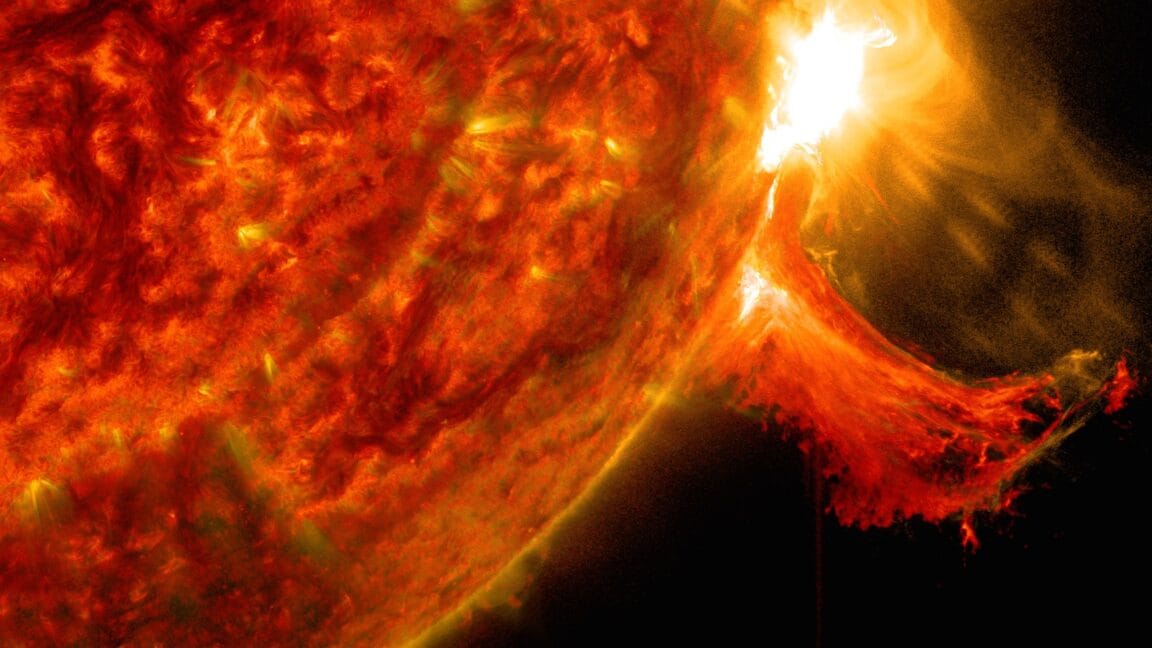
A high‑energy solar explosion occurring roughly 92 million miles from Earth prompted Blue Origin to postpone the upcoming launch of its New Glenn heavy‑lift vehicle. The event, detected by space weather monitoring agencies, released a burst of electromagnetic radiation that interfered with ground‑based communication and navigation systems used for the launch.
New Glenn, the company’s flagship rocket designed to carry large payloads to low‑Earth orbit and beyond, was slated for its inaugural flight from Cape Canaveral Space Force Station later this week. The vehicle, featuring a reusable first stage and a massive 7‑meter diameter payload fairing, has been in development for over a decade and represents a key component of Blue Origin’s long‑term commercial launch strategy.
Company officials indicated that safety protocols require a clear assessment of any space‑weather anomalies that could jeopardize the mission. They noted that the solar event produced elevated levels of solar particle flux, which can disrupt avionics and telemetry equipment. Industry analysts highlighted that such precautions are standard practice for launch providers, especially as the frequency of intense solar activity rises during the current solar cycle.
Blue Origin plans to resume launch preparations once space‑weather forecasts return to nominal conditions, with a revised window expected in the coming weeks. The delay underscores the growing importance of space‑weather monitoring for commercial spaceflight and may influence scheduling decisions for other operators awaiting similar launch opportunities.