Scientists Recreate Cosmic Fireballs at CERN to Investigate Missing Gamma Rays
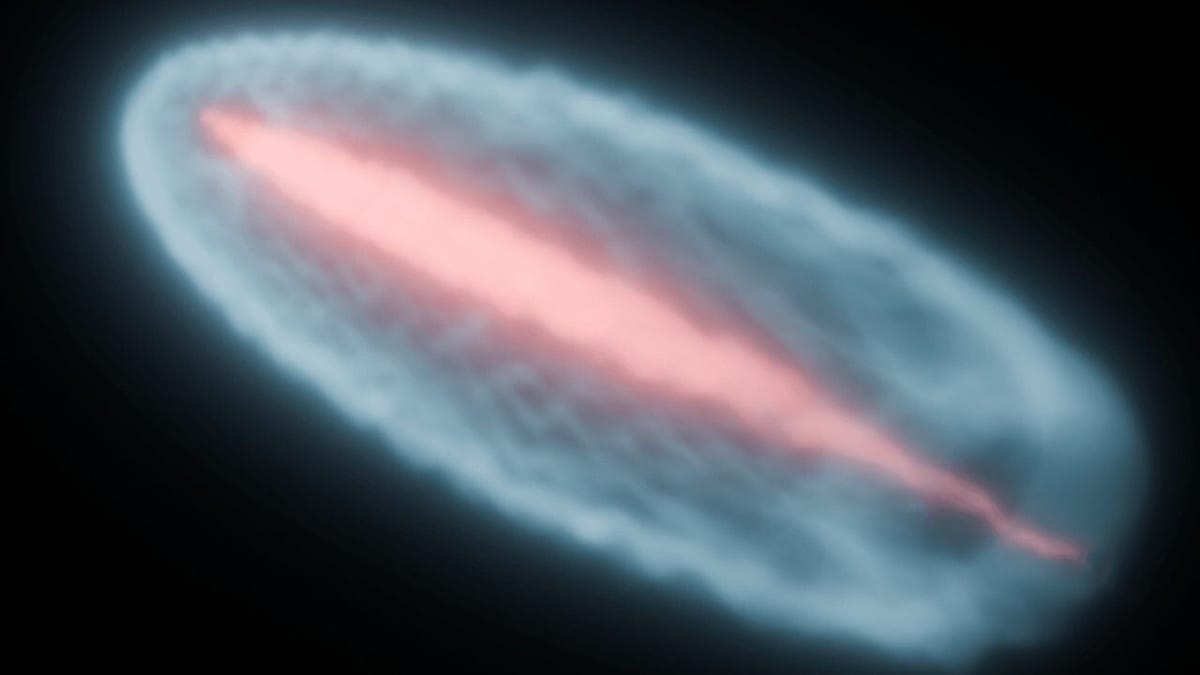
Physicists at the European Organization for Nuclear Research (CERN) have successfully simulated miniature "cosmic fireballs" inside the Large Hadron Collider (LHC) in a landmark experiment aimed at probing a long‑standing gap in high‑energy astrophysics: the apparent shortage of gamma‑ray photons from certain cosmic jet phenomena.
The test, conducted over several weeks, involved colliding heavy ions at energies that generate dense, high‑temperature plasma streams resembling the relativistic jets emitted by pulsars, black holes and supernova remnants. By directing these artificial jets into a specially designed detector array, researchers were able to capture and analyse the resulting cascade of particles, including a spectrum of gamma‑ray photons that had previously eluded observation in natural settings.
Gamma rays are the most energetic form of electromagnetic radiation and are expected to accompany the violent outflows of matter in extreme astrophysical environments. However, satellite observations have repeatedly reported a deficit of such photons, a discrepancy that has prompted speculation about unknown absorption mechanisms or gaps in theoretical models. The CERN experiment sought to recreate the conditions of these jets under controlled laboratory circumstances, allowing scientists to isolate variables such as magnetic field strength, plasma density and jet composition.
Preliminary results indicate that the laboratory‑produced fireballs emit gamma rays with an intensity and energy distribution consistent with predictions from conventional jet models, suggesting that the missing photons observed in space may be due to intervening interstellar material or detector limitations rather than a fundamental flaw in the physics. Senior officials at CERN emphasized that the findings are still early and that further runs will focus on varying the ion species and collision geometry to refine the measurements.
Independent experts in high‑energy astrophysics have welcomed the approach, noting that laboratory analogues provide a valuable complement to astronomical observations. They expect that continued collaboration between particle physicists and space scientists could eventually resolve the gamma‑ray shortfall and improve our understanding of the mechanisms powering some of the universe’s most energetic events.
The next phase of the project will involve scaling up the experiment to higher energies and integrating data from ground‑based gamma‑ray observatories. If successful, the research could bridge a critical gap between terrestrial particle physics and cosmic phenomena, offering new insights into the behavior of matter under extreme conditions.