Scientists Capture First Direct View of Supernova Shockwave Breaking Through Star's Surface
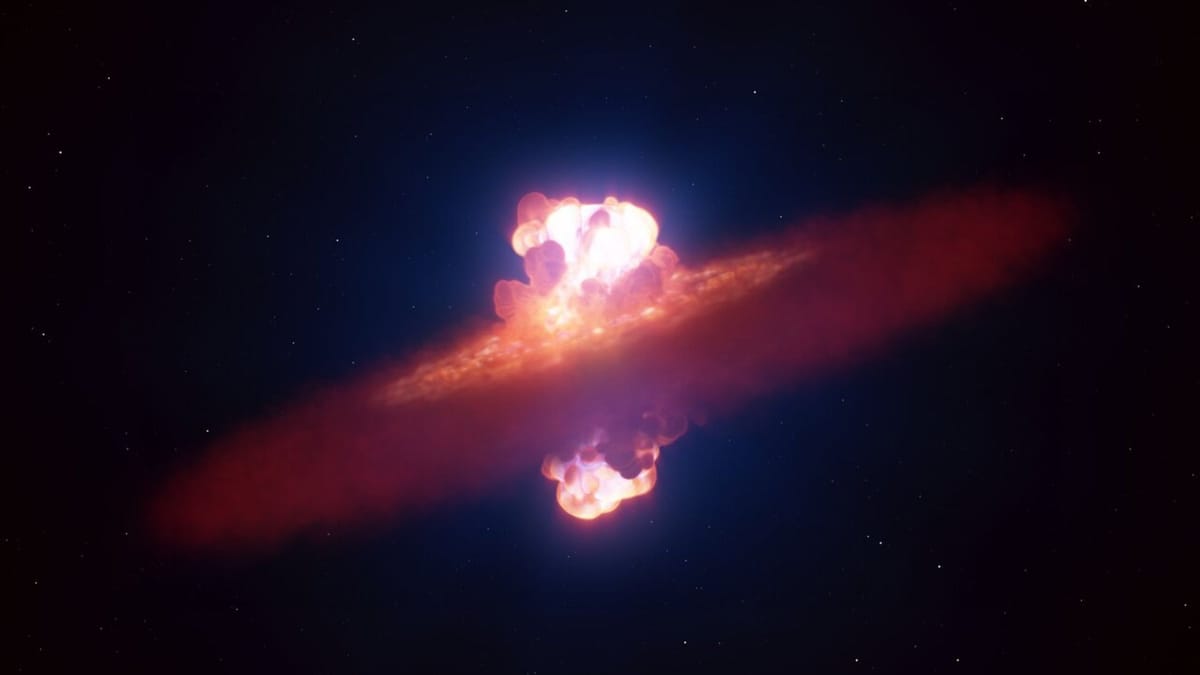
Researchers have recorded, for the first time, the exact moment a supernova shockwave emerges from the outer layers of a dying star, offering unprecedented insight into the dynamics of stellar explosions. The observation was made using a combination of space‑based telescopes and ground‑based facilities that monitored a massive star in a nearby galaxy as it approached the final stages of its life cycle.
The event, detected in the early hours of last week, showed the shockwave—generated by the core collapse of the star—bursting through the stellar envelope in a strikingly symmetrical pattern. This symmetry challenges some existing models that predict irregular, chaotic breakout shapes due to uneven mass distribution within the star. Scientists say the clean, spherical expansion suggests that the progenitor star may have had a relatively uniform structure before the collapse.
Supernovae, the spectacular deaths of massive stars, are key contributors to the chemical enrichment of the universe, dispersing elements such as carbon, oxygen, and iron into interstellar space. Understanding the mechanics of shockwave breakout helps astronomers refine estimates of how much material is ejected and how quickly the explosion can influence surrounding cosmic environments. The new data also provide a benchmark for calibrating theoretical simulations that have, until now, relied heavily on indirect measurements.
According to the observing team, the detection was made possible by a coordinated campaign that combined high‑resolution imaging in the ultraviolet and optical bands with rapid‑response spectroscopy. The instruments captured the rise in brightness, the brief flash of high‑energy radiation, and the subsequent cooling phase as the shockwave expanded outward. These multiple data streams allowed researchers to track the timing and energy release with a precision previously unattainable.
Experts in the field note that while the findings align with many aspects of current supernova theory, the unexpected symmetry may prompt revisions to models of stellar interior dynamics. Ongoing analysis will focus on comparing this event with earlier, less detailed observations and with computer‑generated predictions. Future observations of similar explosions are expected to further clarify whether the symmetry observed is typical or an outlier.
The breakthrough underscores the value of coordinated, multi‑wavelength monitoring of transient astronomical phenomena. As detection capabilities continue to improve, astronomers anticipate that more such detailed snapshots of supernova shockwave breakouts will become routine, deepening our understanding of the life cycles of stars and the evolution of galaxies.