Science Briefing: New Comet Flyby, RFK Jr. Announces Initiative, and Chatbot Data Leak
A mixed bag of scientific developments captured attention on Thursday, ranging from an astronomical flyby to concerns over artificial‑intelligence data security. The stories, highlighted in a Live Science roundup, also included a striking visualization of the Atlantic Meridional Overturning Circulation (AMOC) that underscores ongoing climate monitoring efforts.
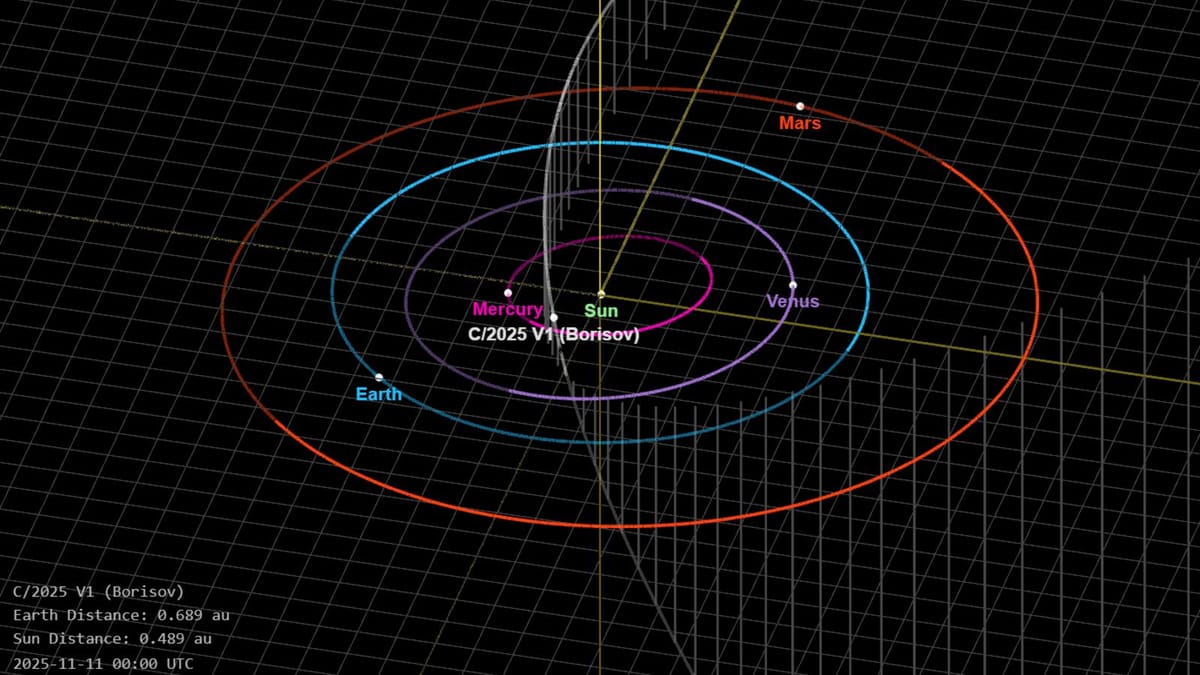
NASA’s Near‑Earth Object Program confirmed that a previously unknown comet, designated C/2025 X1, will make its closest approach to Earth on 2025‑12‑03, passing at a distance of roughly 0.12 astronomical units. The comet, estimated to be 2‑3 kilometres in diameter, was first detected by the Pan‑STARRS telescope in Hawaii earlier this month. Scientists anticipate that ground‑based and space‑based observatories will track its trajectory, composition, and potential meteoroid stream, providing valuable data for understanding the early solar system. No impact risk has been identified, and the event is expected to be visible to the naked eye under dark skies in the northern hemisphere.
In a separate development, environmental advocate Robert F. Kennedy Jr. announced the launch of a nationwide campaign aimed at promoting renewable‑energy adoption and strengthening community resilience to climate change. The initiative, described as a “grassroots movement for clean power,” will coordinate with local municipalities, nonprofit organizations, and industry stakeholders to facilitate the deployment of solar and wind projects. Officials noted that the campaign aligns with recent federal incentives for clean‑energy infrastructure, and analysts predict it could accelerate the United States’ progress toward its 2030 emissions‑reduction targets.
Meanwhile, a data‑leak incident involving a popular chatbot platform raised fresh concerns about the privacy of AI‑generated content. An internal security audit revealed that conversational logs from a subset of users were inadvertently exposed to third‑party developers during a routine software update. The company issued a statement asserting that no personally identifiable information was compromised and that corrective measures, including stricter access controls and enhanced encryption, have been implemented. Industry experts caution that such breaches highlight the need for robust governance frameworks as AI systems become more integrated into daily communication.
Adding to the scientific discourse, a high‑resolution satellite image released by NASA’s Goddard Space Flight Center captured the Gulf Stream as it unfurls across the North Atlantic. The visualization, part of ongoing monitoring of the AMOC, illustrates the complex heat‑transport mechanisms that influence regional climate patterns. Researchers emphasize that continuous observation of these oceanic currents is essential for improving climate‑model forecasts and informing policy decisions related to sea‑level rise and extreme weather events.
Collectively, these stories underscore the dynamic interplay between discovery, policy, and technology in shaping the contemporary scientific landscape.