Massive Rio Raid on Drug Gang Leaves at Least 64 Dead, Including Police Officers
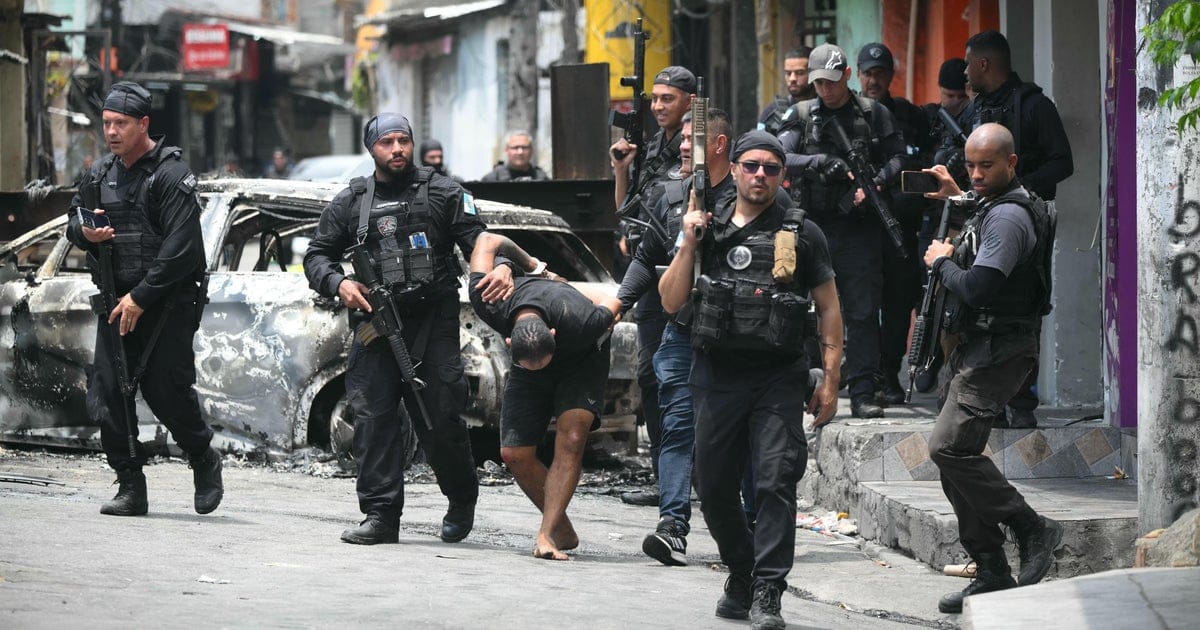
About 2,500 police officers and military personnel launched a large‑scale operation against a drug‑trafficking gang in Rio de Janeiro on Tuesday, arresting 81 suspects and triggering intense gun battles that left at least 64 people dead, among them several police officers.
The coordinated raid, part of a broader security campaign aimed at curbing organized crime in the city’s favelas, began in the early morning hours when forces entered multiple strongholds simultaneously. Witnesses reported a series of exchanges of fire that lasted several hours, with authorities using armored vehicles and aerial support to contain the violence. By the end of the day, the death toll included roughly 60 members of the criminal organization, while the remaining casualties were identified as police and soldiers wounded in the clashes.
Local officials described the operation as a decisive step toward dismantling the gang’s network, which has been linked to drug distribution, illegal arms trafficking, and a series of homicides over the past few years. “The scale of today’s action reflects the government’s commitment to restore public safety in the most affected neighborhoods,” a spokesperson for the state security department said, emphasizing that the arrests and seizures were expected to disrupt the group’s operational capacity.
Security analysts note that while such raids can produce short‑term reductions in crime, sustainable impact depends on follow‑up measures, including community investment and judicial processing of the detained individuals. They caution that the high casualty figure underscores the entrenched nature of the conflict between law‑enforcement agencies and well‑armed criminal factions. Authorities have pledged to continue investigations, expand intelligence‑driven operations, and work with municipal leaders to address the underlying socioeconomic factors that fuel gang activity in Rio.