Live Science Roundup: Aurora Displays, Bridge Collapse in China, New Glenn Rocket Launch, and JWST First Stars Discovery
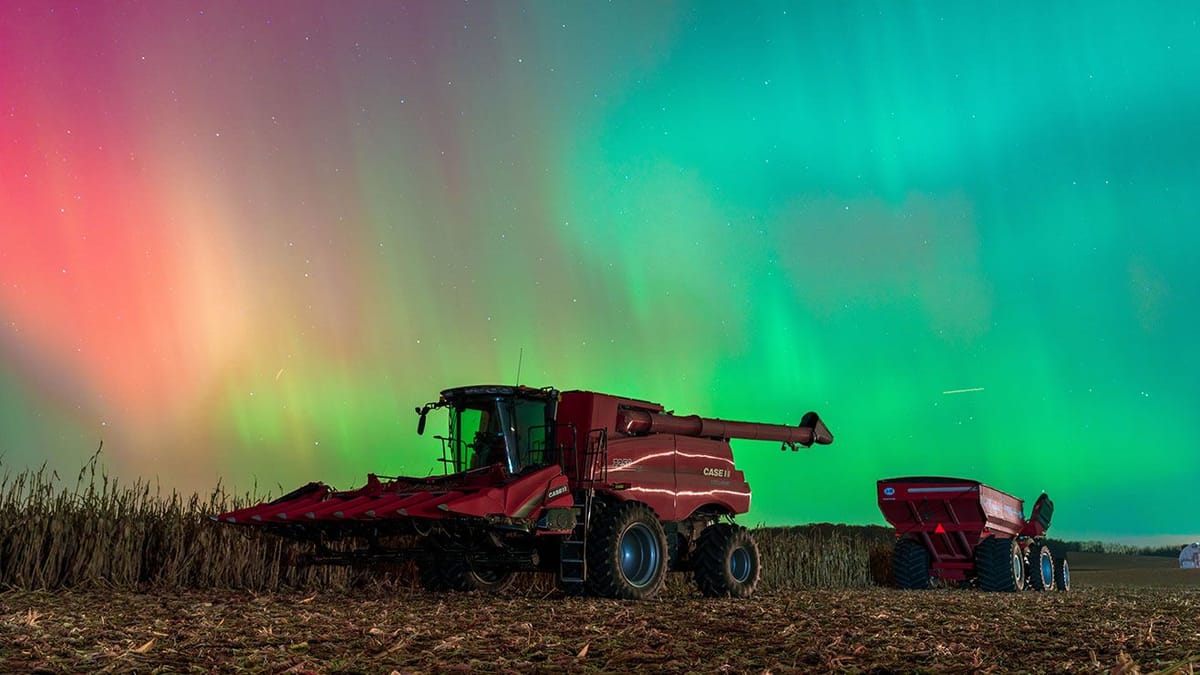
Scientists, engineers, and observers reported a series of notable events on November 12, 2025, ranging from spectacular atmospheric phenomena to critical infrastructure failures and major milestones in space exploration.
Bright auroral activity illuminated the night sky across high‑latitude regions, with the northern lights visible as far south as parts of northern Europe and Canada. Experts attributed the intensified displays to a recent geomagnetic storm triggered by solar wind particles interacting with Earth’s magnetic field. Researchers noted that such activity, while visually striking, can also affect satellite communications and power grids, prompting monitoring agencies to issue precautionary advisories.
In a separate incident, the Hongqi Bridge in the southeastern province of Guangdong suffered a partial collapse during routine maintenance work. Preliminary reports indicated that structural fatigue, compounded by heavy rainfall, contributed to the failure. Local authorities dispatched emergency crews, and no casualties were confirmed at the time of reporting. Officials emphasized the need for comprehensive inspections of aging infrastructure nationwide and announced a temporary suspension of traffic on nearby routes while safety assessments continue.
Meanwhile, Blue Origin successfully launched its New Glenn orbital vehicle from the Kennedy Space Center, marking the first flight of the heavy‑lift rocket since its development phase. The mission delivered a payload of scientific satellites into low‑Earth orbit and demonstrated the reusable booster’s capability to land safely on a designated offshore platform. Industry analysts described the launch as a pivotal step toward expanding commercial access to space and noted that the company plans additional flights later this year.
On the astronomical front, the James Webb Space Telescope (JWST) captured images that reveal the universe’s earliest generation of stars, providing direct evidence of star formation within the first 200 million years after the Big Bang. The composite view of galaxy cluster MACS J0416, assembled from JWST and Hubble observations, highlights regions of intense infrared emission where primordial stars are believed to have ignited. Scientists said the findings will refine models of cosmic evolution and inform future observations with next‑generation telescopes.
Collectively, these events underscore the dynamic interplay between natural phenomena, human engineering, and scientific discovery. As agencies continue to assess the bridge collapse and monitor space weather, the successful New Glenn launch and JWST breakthrough signal continued progress in humanity’s quest to explore and understand both Earth and the cosmos.