Latest Science Highlights: New Comet 3I/ATLAS Image, Beaver Supermoon, and the Ongoing AI Race
Scientists announced several notable developments on Saturday, ranging from a fresh view of an interstellar comet to an unusual lunar event and renewed debate over the pace of artificial‑intelligence investment. The announcements were bundled in a live‑science briefing that aimed to showcase the breadth of contemporary research.
The centerpiece of the briefing was the release of a high‑resolution image of comet 3I/ATLAS, the third interstellar object detected passing through the Solar System. Captured by the Pan‑STARRS telescope in Hawaii, the photograph reveals distinct jets of dust and a faint icy nucleus, confirming earlier spectroscopic hints that the comet contains a mixture of volatile compounds not commonly found in native Solar System comets. Astronomers noted that the data will help refine models of planetary formation beyond our own system and may guide future missions aimed at intercepting interstellar bodies.
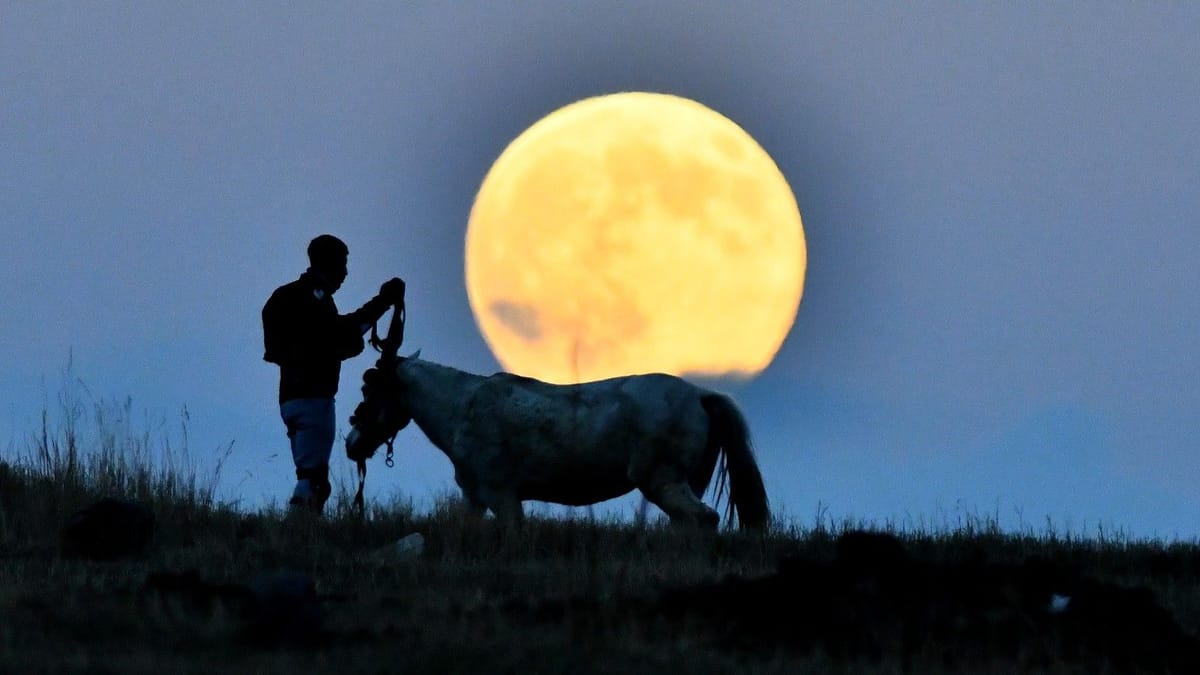
In a separate segment, astronomers highlighted an upcoming “Beaver Supermoon,” a colloquial term for a particularly close full moon that will appear over North America’s beaver‑rich waterways later this month. The event, caused by the moon’s perigee coinciding with a full phase, will make the lunar disk appear up to 14 percent larger and 30 percent brighter than average. While the name is informal, local wildlife officials mentioned that the increased nocturnal illumination could temporarily affect beaver foraging patterns, though any long‑term ecological impact is expected to be minimal.
Meanwhile, market analysts and technology experts revisited the so‑called AI bubble, questioning whether the recent surge in venture capital funding and stock valuations reflects sustainable growth or speculative excess. Data from the New York Stock Exchange showed a marked increase in AI‑related equity trades over the past quarter, prompting regulators to monitor disclosure practices more closely. Industry observers cautioned that while AI continues to drive productivity gains across sectors, investors should assess underlying fundamentals rather than hype.
Collectively, these stories underscore the dynamic interplay between scientific discovery, natural phenomena, and economic forces. Researchers plan to release detailed findings on the comet later this year, astronomers will host public viewing events for the Beaver Supermoon, and policymakers are expected to propose guidelines aimed at tempering speculative behavior in the AI market. The coming months will likely provide clearer signals on how each of these domains evolves.