Iraqis Cast Votes in Parliamentary Election Amid Tight Security and Major Boycott
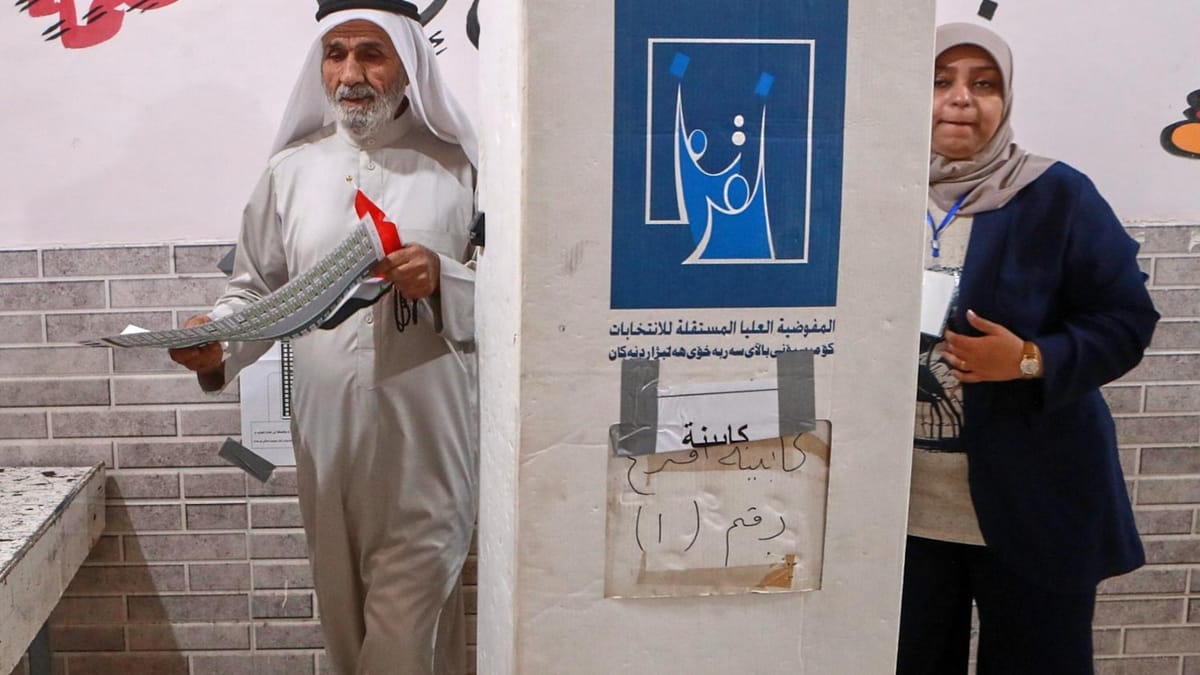
Baghdad — Voters across Iraq headed to the polls on Tuesday for a nationwide parliamentary election that unfolded under heightened security measures and a boycott by one of the country’s largest political blocs. The election, which determines the composition of the 329‑seat Council of Representatives, was overseen at 8,703 polling stations spanning the capital and the provinces.
Authorities deployed thousands of security personnel, including army units and police, to guard polling sites, man checkpoints, and monitor potential threats from extremist groups. Early reports indicated that voter turnout hovered around 55 percent, a modest figure compared with previous elections, reflecting both security concerns and the impact of the boycott.
The boycott was announced by a major political alliance that accused the electoral law of favoring established parties and called for reforms before participating. The group urged its supporters to abstain, arguing that participation would legitimize a process they deemed unfair. As a result, the bloc is expected to secure few, if any, seats, potentially reshaping the balance of power among the remaining parties.
Government officials emphasized that the election proceeded in a “transparent and orderly” manner, highlighting the presence of domestic and international observers who noted generally smooth operations. Election analysts, however, cautioned that the absence of a key bloc could complicate coalition‑building efforts, making it harder to achieve the parliamentary majority needed to form a stable government. They also pointed to the modest turnout as a sign of voter fatigue and lingering distrust in the political system.
Looking ahead, the newly elected parliament is slated to convene within the next few weeks to elect a speaker and begin coalition talks. Observers expect that negotiations may be prolonged, given the fragmented parliamentary landscape and the need to address the concerns raised by the boycotting alliance. The outcome will be closely watched both domestically and internationally, as Iraq’s political stability remains pivotal for regional security and economic development.