Interstellar Object 3I/ATLAS Shows Color Shift and Non‑Gravitational Acceleration, Researchers Report
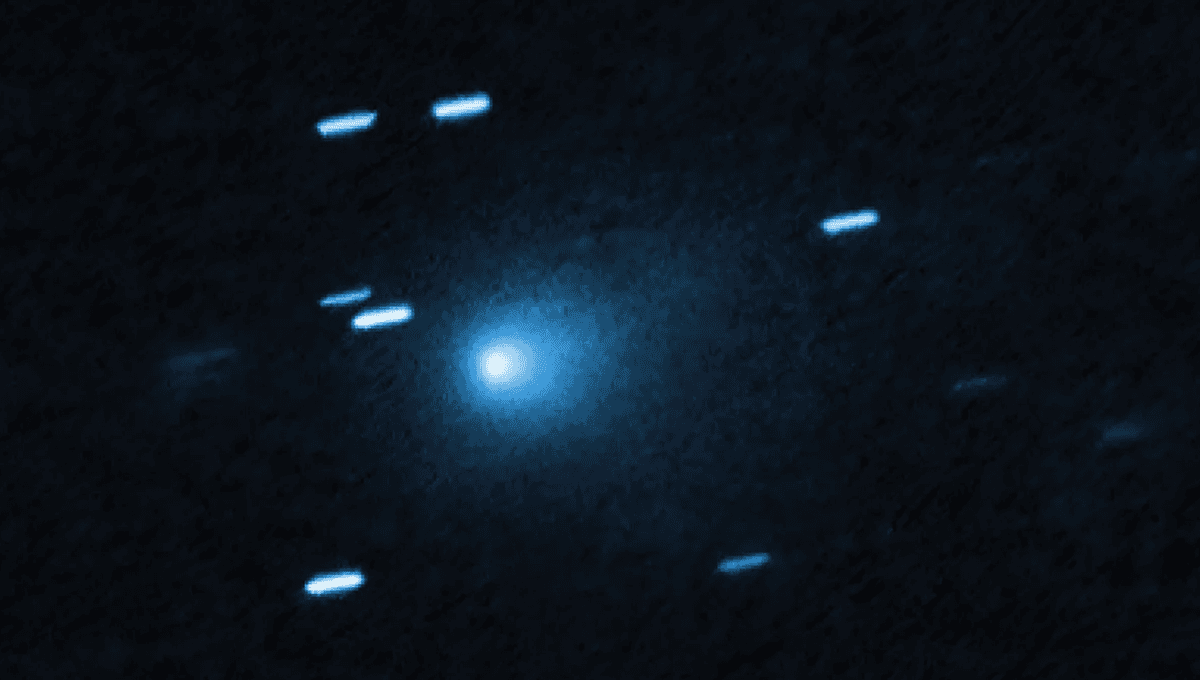
A team of astronomers monitoring the interstellar object designated 3I/ATLAS has reported a second observable change in the object's color, accompanied by evidence of non‑gravitational acceleration. The findings were released after a series of observations made with ground‑based telescopes over the past several weeks, adding new data to the limited knowledge of objects that travel through the Solar System from outside.
The object, first detected earlier this year, initially displayed a reddish hue that later faded to a more neutral tone. In the most recent observations, the surface appears to have shifted toward a slightly bluish tint. Scientists suggest that such color variations could result from the exposure of fresh material as volatile compounds sublimate, or from space‑weathering effects that alter surface reflectance over time.
In addition to the color change, precise astrometric measurements indicate a slight deviation from a purely gravitational trajectory. The acceleration is consistent with forces that could be generated by outgassing—similar to cometary activity—despite the object's lack of a visible coma. Researchers emphasize that the data are still preliminary, and they are cautious about assigning a definitive mechanism without further spectroscopic analysis.
The observations echo the earlier debate surrounding the first known interstellar visitor, ‘Oumuamua, which also exhibited unexplained acceleration. While some experts argue that such behavior may point to novel physical processes, others maintain that it can be explained by standard cometary physics applied to bodies with unusual compositions. The current consensus leans toward a cautious interpretation, noting that interstellar objects may present a broader range of properties than those observed within the Solar System.
Future monitoring campaigns are planned as 3I/ATLAS continues its outbound journey. International observatories will coordinate to capture additional photometric and spectroscopic data, aiming to clarify the nature of the acceleration and to determine whether the color changes are transient or indicative of a more permanent surface alteration. The continued study of 3I/ATLAS promises to deepen our understanding of the composition and dynamics of material originating beyond our planetary neighborhood.