Interstellar Comet 3I/ATLAS Spotted Near Perihelion
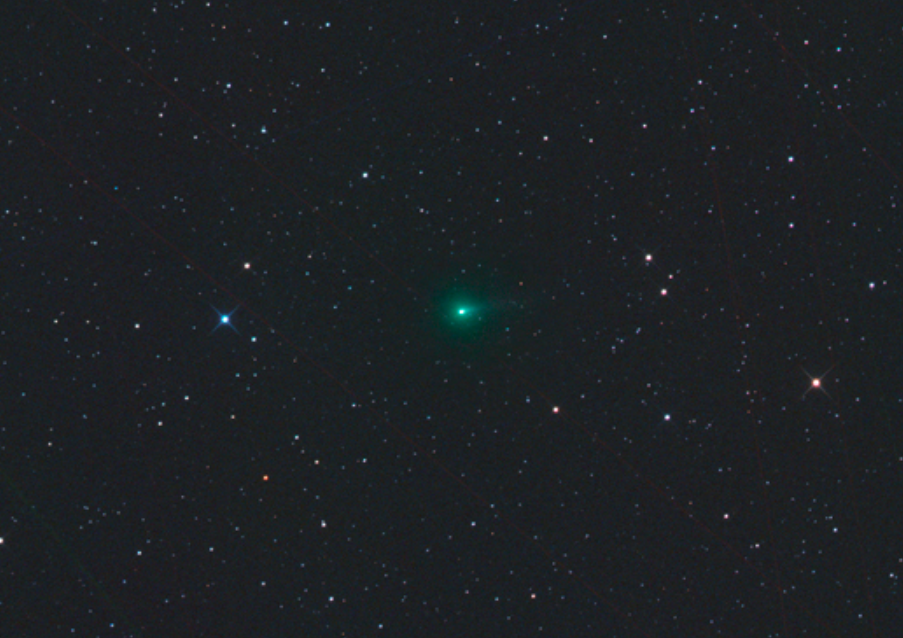
Amateur astronomers around the globe reported that interstellar comet 3I/ATLAS has entered the vicinity of its perihelion this week, offering a rare opportunity for both professional and citizen scientists to observe an object from beyond the solar system as it reaches its closest approach to the Sun.
The comet, first identified in early 2024 by a network of sky surveys, follows a hyperbolic trajectory that confirms its origin outside the solar system. Its current position, roughly 0.45 astronomical units from the Sun, places it within the inner solar system for the first time since discovery, allowing telescopes of varying apertures to capture detailed photometric and spectroscopic data.
Observatories in both hemispheres have coordinated to monitor the comet’s brightness and tail development. Preliminary measurements indicate a gradual increase in luminosity, consistent with the sublimation of volatile ices as solar heating intensifies. Experts suggest that the comet’s composition could provide clues about the chemistry of distant planetary systems, complementing data gathered from earlier interstellar visitors such as ‘Oumuamua and comet 2I/Borisov.
“The proximity of 3I/ATLAS to perihelion presents a valuable window for studying material that formed around another star,” a spokesperson for an international astronomy consortium said, emphasizing the importance of rapid data collection. Meanwhile, amateur groups have contributed high‑frequency imaging that helps refine orbital calculations and alerts professionals to transient phenomena such as outbursts or fragmentation.
Authorities at major space agencies have indicated interest in targeting the comet with future fly‑by missions, though any such endeavor would require substantial lead time. In the meantime, the scientific community is focusing on ground‑based observations, leveraging networks that include professional telescopes, university facilities, and dedicated citizen‑science platforms.
As 3I/ATLAS continues its brief passage through the inner solar system, astronomers expect its visibility to wane over the next several weeks. The data collected during this period will be archived for comparative studies, helping to build a broader understanding of interstellar objects and their role in the cosmic exchange of material.