Interstellar comet 3I/ATLAS brightens as it speeds toward Mars – Live Science photo of the week
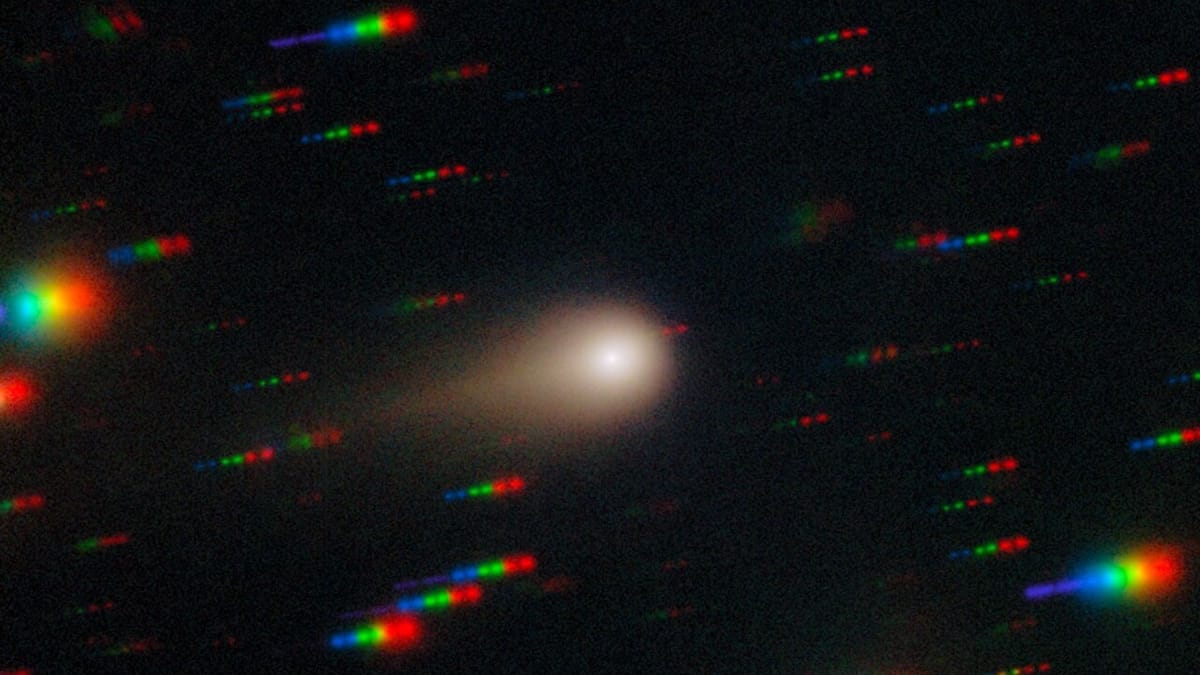
The interstellar comet designated 3I/ATLAS has begun to develop a pronounced tail as it races through the inner solar system, drawing the attention of astronomers worldwide. First detected earlier this year, the object is now visible to the naked eye under dark skies and is slated to pass relatively close to Mars in the coming weeks.
3I/ATLAS follows a hyperbolic trajectory that originates outside the Solar System, placing it among the very few interstellar visitors recorded to date. Its current activity level—evidenced by the growing dust and gas tail—suggests that solar heating is rapidly sublimating volatile materials on its surface. Observatories in both hemispheres have reported a steady increase in brightness, prompting a coordinated observation campaign involving ground‑based telescopes and space‑based assets such as the Hubble Space Telescope.
Scientists are using the comet’s approach to refine models of how interstellar objects interact with solar radiation. The event also offers a rare opportunity to compare 3I/ATLAS with earlier interstellar visitors like ʻOumuamua (2017) and 2I/Borisov (2019). Preliminary analyses indicate that its composition may be similar to that of long‑period comets from the Oort Cloud, though subtle differences could reveal unique chemical signatures from its home system.
While the comet’s trajectory does not pose any impact threat to Earth, its proximity to Mars has sparked interest from planetary researchers. Officials from the Mars mission community note that the passage could provide additional data on the Martian atmosphere’s response to cometary material, potentially informing future atmospheric studies.
Looking ahead, the comet is expected to reach peak brightness in early October before gradually fading as it exits the inner Solar System. Astronomers will continue to monitor its evolution, and live‑streamed observations are planned for the public. The event underscores the growing capability of the astronomical community to detect and study objects from beyond our own planetary neighborhood, expanding our understanding of the broader galactic environment.