Harvard Scientist Warns Interstellar Comet 3I/ATLAS May Become Highly Active at Closest Approach
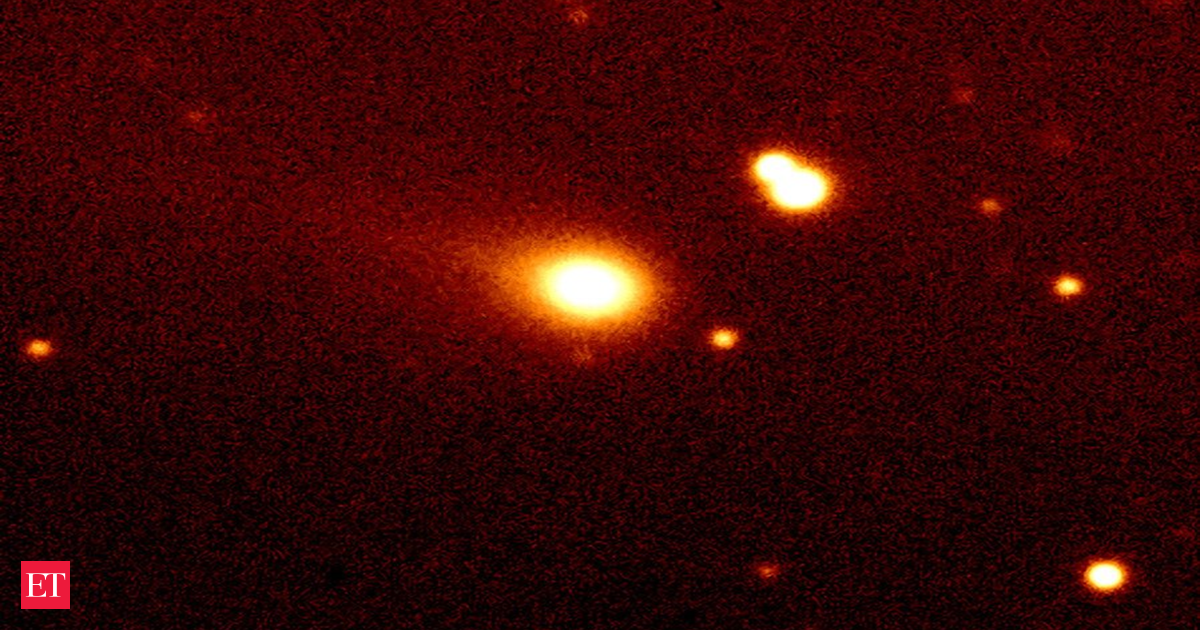
Interstellar comet 3I/ATLAS is set to reach its perihelion – the point nearest to the Sun – within the next few days, an event that astronomers say could dramatically alter the object's appearance and behavior. The comet, first detected earlier this year, measures roughly the size of Manhattan and is traveling at a speed of about 60 km/s as it approaches the inner solar system.
Experts note that the comet’s close encounter with the Sun will expose it to intense solar radiation and heat, potentially causing volatile materials on its surface to sublimate. This process can create a bright coma and elongated tail, making the object far more visible to both professional observatories and amateur skywatchers. Similar transformations were observed with the interstellar visitor 2I/Borisov in 2019, which developed a pronounced tail after its own perihelion passage.
Harvard‑affiliated researchers have issued a cautious warning, stating that the increased activity could pose challenges for observation. "The comet’s rapid brightening may saturate some instruments, requiring adjustments to exposure settings," the team noted in a briefing. They also emphasized the scientific value of monitoring the event, as changes in the comet’s composition could provide clues about the environment of other planetary systems.
Observatories worldwide are preparing coordinated campaigns to track 3I/ATLAS across multiple wavelengths, from visible light to infrared. Early images released by space‑based telescopes show a faint, diffuse halo surrounding the nucleus, hinting at the onset of outgassing. Analysts expect the comet’s brightness to peak within 24‑48 hours of perihelion, after which it will begin to recede and gradually fade.
While the exact trajectory of 3I/ATLAS remains well‑determined, its future beyond the solar system is uncertain. Scientists anticipate that the comet will exit the inner planetary region within a few weeks, continuing its journey through interstellar space. The event offers a rare opportunity to study material that originated beyond our Sun, potentially advancing understanding of planetary formation elsewhere in the galaxy.