First Radio Signal from Interstellar Comet 3I/Atlas Confirms Its Natural Origin
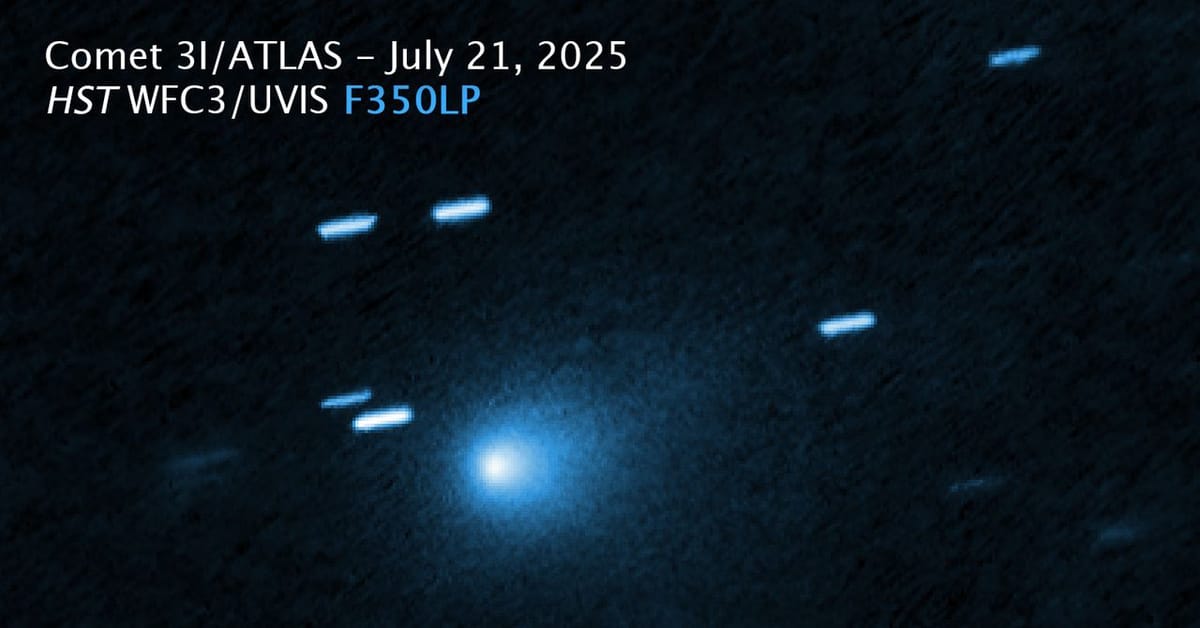
Scientists announced Monday that a faint radio transmission detected from the interstellar comet 3I/Atlas provides the first direct evidence that the object is a natural body rather than an artificial construct. The signal, captured by an array of ground‑based radio telescopes operating in the 1–10 GHz band, matches the expected thermal emission profile of icy debris traveling at roughly 60 km s⁻¹ through the solar system.
The discovery follows a period of intense public speculation after the comet’s hyperbolic trajectory was first reported in early June. Media outlets and online forums buzzed with theories ranging from alien probes to secret government experiments, fueled in part by appearances on popular podcasts. Astronomers, however, have long viewed 3I/Atlas as the next interstellar visitor after 1I/‘Oumuamua and 2I/Borisov, and the new radio data aligns with models of cometary nuclei composed of volatile ices and dust.
According to a statement released by the International Astronomical Union’s Working Group on Small Bodies, the detection “supports the prevailing hypothesis that 3I/Atlas is a naturally occurring comet originating from another stellar system.” The group noted that the radio spectrum shows a smooth continuum without the narrowband features that would suggest engineered transmission. Experts from several space agencies echoed the sentiment, emphasizing that the findings will help refine estimates of how frequently such objects pass through the inner solar system.
While the signal settles the debate over the comet’s nature, researchers say the event opens new opportunities for studying interstellar material up close. Plans are under discussion to coordinate observations across optical, infrared, and radio facilities during the comet’s next perihelion passage later this year. The collaborative effort aims to gather data that could illuminate the composition of distant planetary systems and improve detection strategies for future interstellar visitors.