Experts warn a U.S. move to oust Venezuela's Maduro could trigger prolonged military involvement and chaos
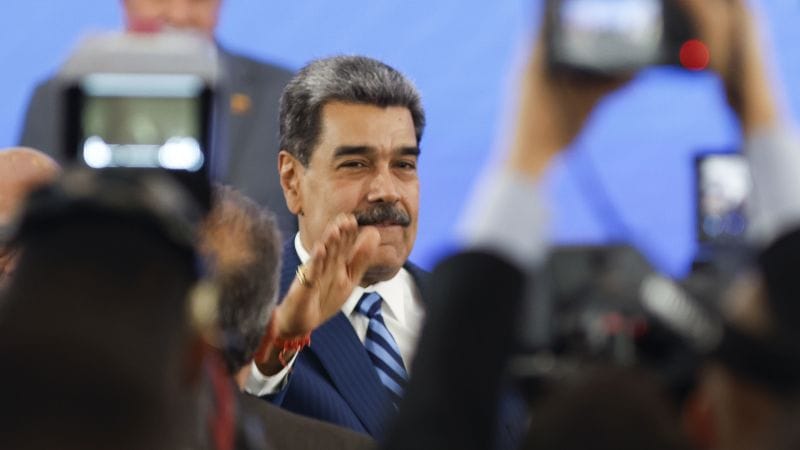
President Donald Trump has publicly asserted that Venezuelan President Nicolás Maduro’s tenure is nearing its end and hinted that ground operations inside Venezuela could be contemplated. The remarks, made during a recent rally, revived longstanding speculation about a possible U.S. effort to remove Maduro from power, a scenario that analysts say would entail far‑reaching consequences.
While the president’s statements suggest a willingness to consider direct action, U.S. officials have not disclosed concrete plans or timelines for any military engagement. The administration’s current posture, according to unnamed senior defense officials, emphasizes diplomatic pressure and targeted sanctions rather than a full‑scale invasion. Nonetheless, the rhetoric has sparked renewed debate within policy circles about the feasibility and risks of a large‑scale operation.
Regional security experts caution that any attempt to depose Maduro would likely require a sustained commitment of troops, equipment, and logistical support far beyond a short‑term strike. They point to the challenging terrain of Venezuela’s jungles and mountains, as well as the need to secure supply lines across a vast border shared with Colombia and Brazil. Moreover, analysts note that the Venezuelan armed forces, though strained by economic crisis, retain significant capabilities and could prolong hostilities, potentially leading to a protracted conflict.
Historically, the United States has intervened in Latin America with mixed results, from the 1960s Bay of Pigs fiasco to more recent limited operations in the region. Observers argue that a repeat of past missteps could undermine U.S. credibility and destabilize neighboring countries. The prospect of a humanitarian crisis, mass displacement, and a power vacuum is also highlighted as a major concern by international NGOs.
In response, several Latin American governments have called for restraint and urged diplomatic dialogue, emphasizing the need for a peaceful resolution through multilateral institutions. The European Union and the United Nations have similarly advocated for negotiations that address Venezuela’s political and economic turmoil. As the situation evolves, policymakers are expected to weigh the strategic costs against the potential gains of a regime change, with the consensus that any military option would be fraught with uncertainty and long‑term repercussions.