Exceptionally Preserved Edmontosaurus Fossil Enables Detailed Artistic Reconstruction
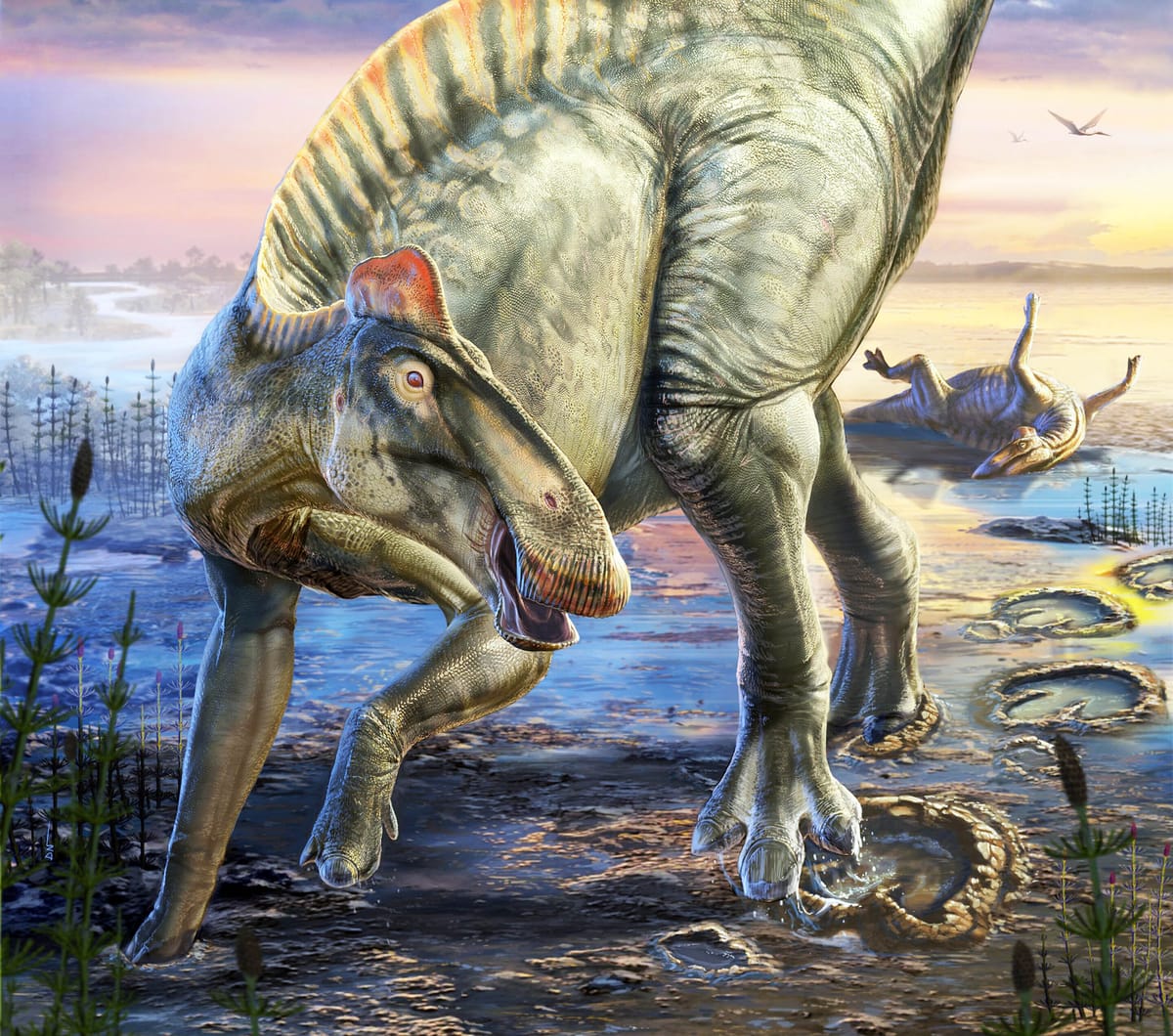
Scientists from the University of Chicago have re‑examined the remains of an Edmontosaurus annectens that lived more than 66 million years ago and found that the specimen is preserved in such detail that artists can now recreate the dinosaur’s appearance with unprecedented accuracy.
The fossil, discovered in the late 1990s in the Hell Creek Formation of Montana, includes not only a near‑complete skeleton but also skin impressions, muscle attachment sites and even traces of soft tissue. Using high‑resolution CT scanning and laser‑based surface mapping, researchers generated a digital model that captures the texture and coloration patterns suggested by the preserved integument.
Experts say the level of preservation is comparable to that of so‑called “dinosaur mummies,” rare finds that retain impressions of skin and other soft parts. Such specimens provide crucial insight into the biology of extinct animals, allowing scientists to infer aspects of their physiology, behavior and environment that skeletal remains alone cannot reveal. The Edmontosaurus, a large herbivorous hadrosaurid, is especially important because it represents one of the last dinosaur groups to thrive before the Cretaceous‑Paleogene extinction event.
In collaboration with paleoartists, the research team has produced a series of life‑like visualizations that depict the dinosaur’s probable coloration, skin texture and overall body shape. The reconstructions are based on comparative studies of modern reptiles and birds, as well as pigment residues detected in the fossil. While the exact hues remain speculative, the models are grounded in the available scientific evidence and serve as valuable educational tools.
The discovery underscores the value of revisiting previously collected fossils with modern imaging technology. Paleontologists anticipate that similar analyses of other well‑preserved specimens could further refine our understanding of dinosaur diversity and ecology during the final chapter of the Mesozoic Era. The team plans to publish the full dataset and invite additional researchers to explore the digital model for further studies.