Chinese Astronauts Remain Healthy After Space Debris Delays Their Return
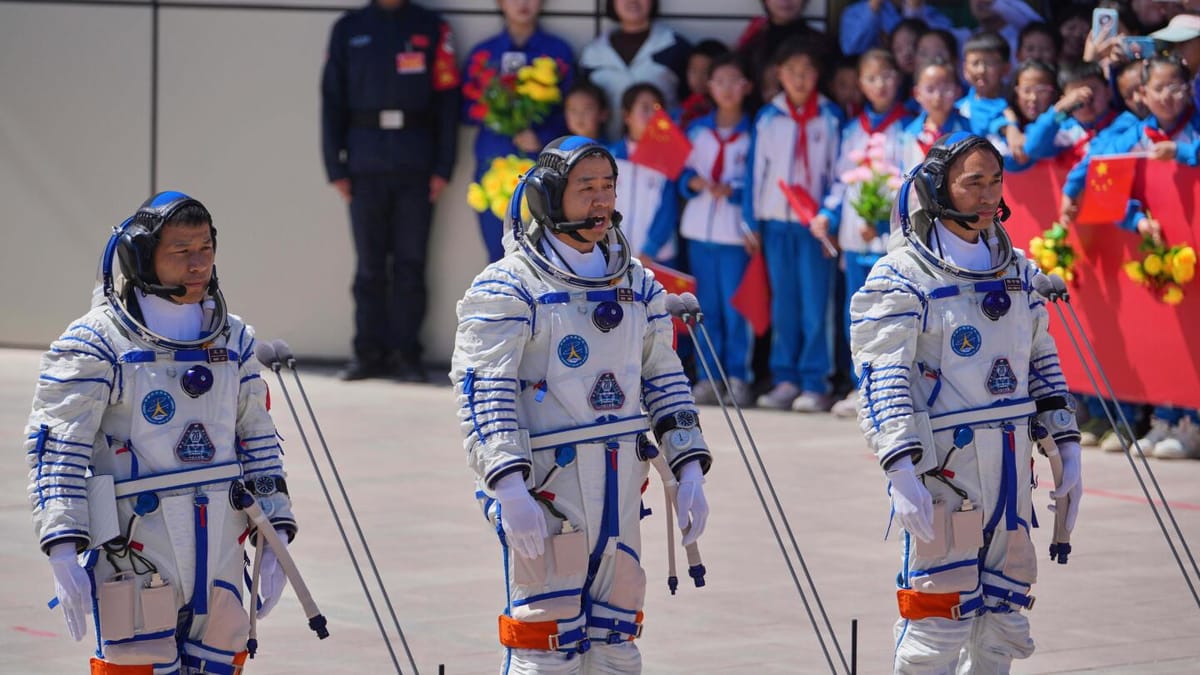
BEIJING (AP) – The crew of China’s latest manned spaceflight is reported to be in good health, carrying out routine work and living normally aboard the Tiangong space station, the China Manned Space Engineering Office said on Tuesday.
The three‑person crew, launched aboard the Shenzhou‑16 spacecraft in early June, is conducting a series of scientific experiments and maintenance tasks on the orbiting laboratory. Their return to Earth had been scheduled for early October, but mission controllers postponed the landing after a cluster of space debris was detected on a trajectory that could intersect the spacecraft’s re‑entry path.
Officials explained that the decision was taken out of an abundance of caution. The debris field, consisting of defunct satellite fragments and spent rocket stages, was tracked by both Chinese and international space‑situational‑awareness networks. Similar concerns have led to brief delays in other missions in recent years, reflecting the growing challenge of managing low‑Earth‑orbit congestion.
Chinese authorities emphasized that crew safety remains the top priority. A spokesperson for the agency noted that the astronauts continue to follow a regular schedule of scientific work, health monitoring, and exercise, which helps mitigate the effects of an extended stay. Independent space analysts echoed the sentiment, saying that postponements, while inconvenient, are preferable to risking a hazardous re‑entry.
The revised return window is expected to open in late October, pending clearance from debris‑avoidance assessments. Mission planners are also reviewing longer‑term strategies for debris mitigation, including coordination with international partners on active removal technologies. The delayed landing is not anticipated to affect the overall timetable for the Tiangong program, which aims to maintain a continuous human presence in orbit through the decade.