China's Stranded Astronauts Near Return as New Glenn Launch Resumes and Auroras Light Up Skies
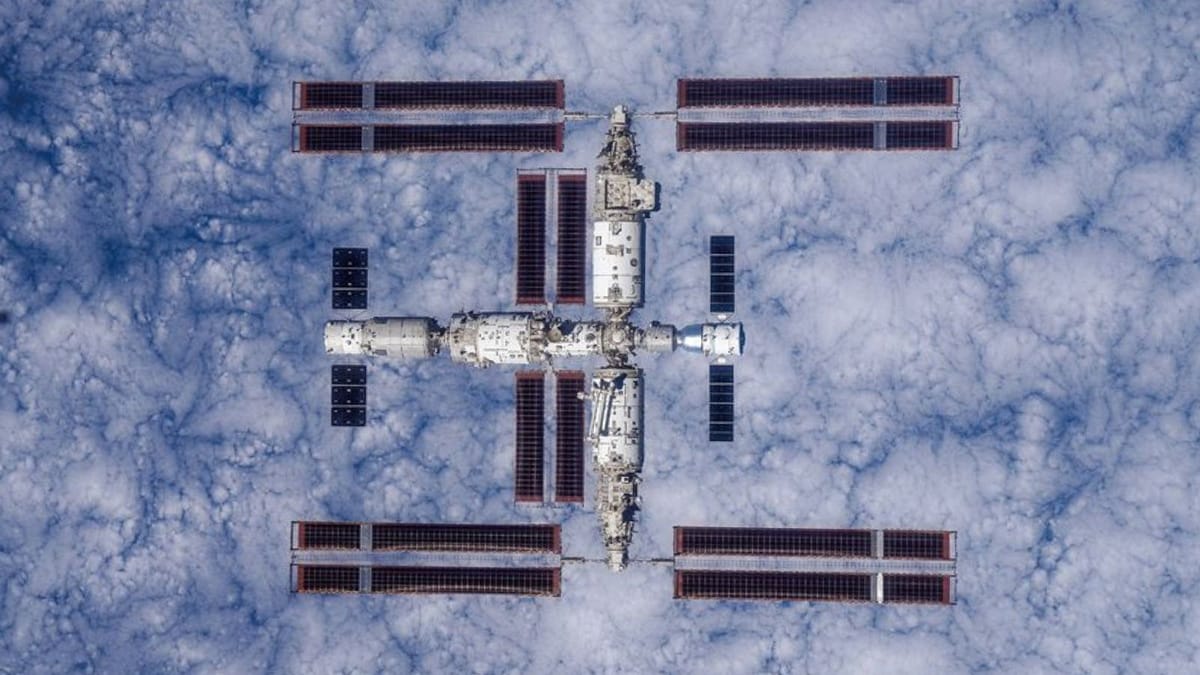
Beijing, 13 November 2025 – Chinese officials indicated that the crew of the Shenzhou‑15 mission, currently stranded in low Earth orbit, could be brought home as early as Friday, according to a statement released on the nation’s space agency website. The announcement was part of a broader science briefing that also covered the upcoming launch of Blue Origin’s New Glenn rocket and a spectacular display of auroras across northern latitudes.
The Shenzhou‑15 crew has been confined to the orbital module for more than 48 hours after an unexpected power anomaly forced the service module to remain attached, preventing the standard re‑entry sequence. Engineers have been working around the clock to isolate the fault, perform a software reset, and ready the re‑entry capsule for a controlled de‑orbit burn. Ground controllers reported that all critical systems are now nominal, and the burn window scheduled for Thursday night appears to be viable.
China’s human‑spaceflight program, which began in 2003, has completed 15 crewed missions to date and has rarely encountered prolonged orbital delays. The agency’s swift response is being viewed as a test of its growing autonomous capabilities, especially as the nation expands its Tiangong space station and prepares for lunar exploration later in the decade. International observers note that a safe return would reinforce confidence in the program’s resilience.
In related news, Blue Origin is set to attempt the inaugural launch of its heavy‑lift New Glenn vehicle from Florida’s Kennedy Space Center on Thursday, following a series of technical postponements. The mission will carry a mixed payload of commercial satellites and scientific experiments, marking a significant step for the company’s commercial launch services and its competition with other heavy‑lift providers.
Meanwhile, a moderate geomagnetic storm triggered by solar wind activity has produced vivid auroral displays from Scandinavia to northern Canada. Scientists say the event offers valuable data on solar‑terrestrial interactions and may improve forecasting models for future space weather events that can affect satellite operations and power grids.
If the re‑entry burn proceeds as planned, the Shenzhou‑15 crew will land in Inner Mongolia’s designated recovery zone, concluding the episode without injury. The successful return, alongside New Glenn’s launch and the aurora spectacle, underscores a week of dynamic activity across the global space and scientific community.