China commissions its newest aircraft carrier, the Fujian
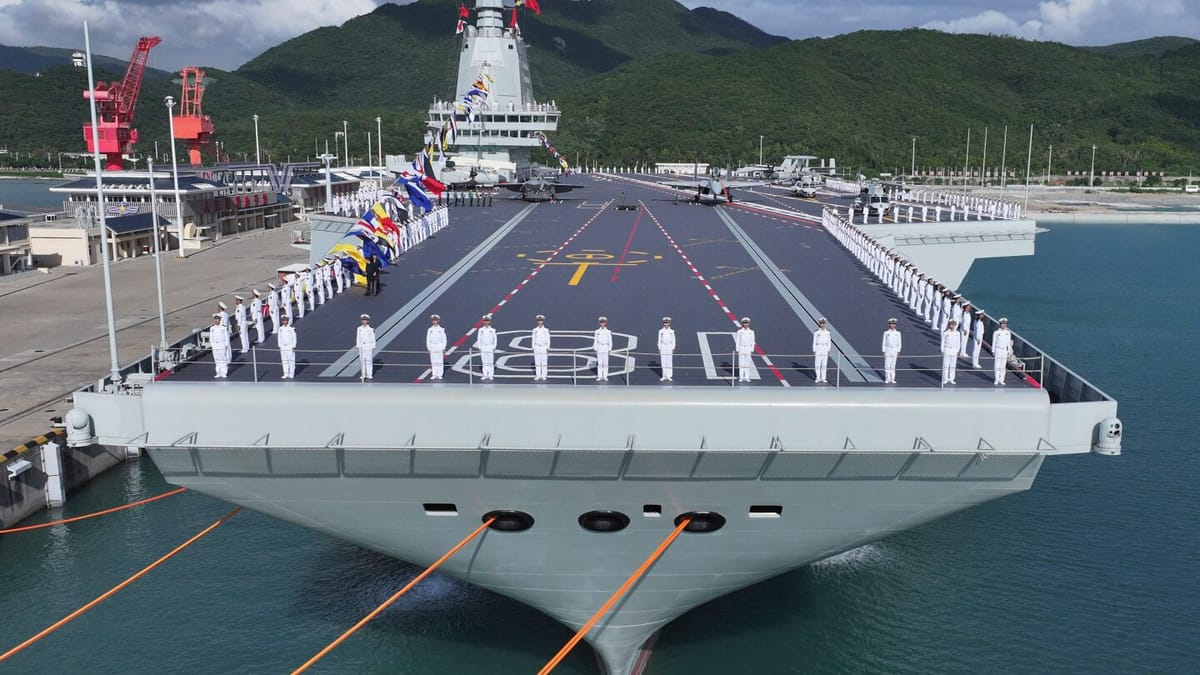
China has formally commissioned its third aircraft carrier, the Fujian, marking a significant expansion of its naval capabilities. The vessel joins the Liaoning and Shandong, giving Beijing the second‑largest carrier fleet in the world after the United States, which operates eleven carriers. The commissioning ceremony took place in Shanghai and was attended by senior military officials, underscoring the strategic importance the Chinese leadership places on power projection at sea.
The Fujian is a displacement‑class carrier of approximately 80,000 tonnes and features a catapult‑assisted launch system, a first for Chinese‑built carriers. Unlike its predecessors, which rely on ski‑jump ramps for aircraft take‑off, the Fujian uses an electromagnetic aircraft launch system (EMALS) that allows a broader range of fixed‑wing aircraft, including newer fighter jets, to operate from its deck. Built at the Jiangnan Shipyard, the ship incorporates advanced radar, integrated combat systems, and a larger air wing capacity, reflecting a shift toward more sophisticated naval technology.
The addition of the Fujian is viewed by regional analysts as a step toward closing the qualitative gap with the U.S. Navy. Experts note that while the United States still maintains a decisive advantage in carrier numbers and experience, the introduction of EMALS and a larger flight deck could enhance China's ability to conduct sustained air operations in the East and South China Seas. Chinese defense officials emphasized that the carrier will support the country's maritime security objectives and contribute to deterrence, while neighboring governments called for continued dialogue to avoid escalation.
Looking ahead, Beijing is expected to continue modernising its fleet, with plans for additional carriers and accompanying support vessels already under discussion. The Fujian’s deployment will likely focus on protecting sea lanes, conducting joint exercises, and projecting power in contested maritime regions. Observers suggest that the carrier’s operational readiness will be closely monitored by the United States and its allies, shaping future naval strategies in the Indo‑Pacific theater.