Certain Bat Species Glow Under UV Light, Scientists Puzzled
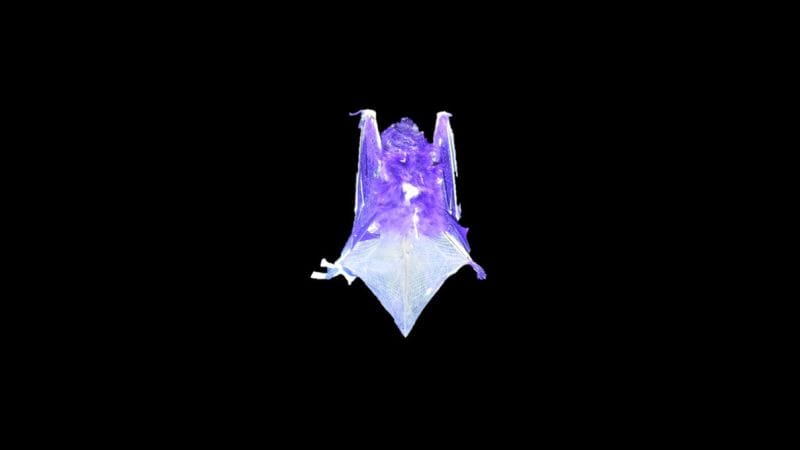
Researchers at a university in Georgia have documented that several North American bat species exhibit a faint, blue‑green glow when exposed to ultraviolet (UV) light, a phenomenon previously observed only in a handful of mammalian groups.
The discovery emerged during routine fieldwork in which captured bats were briefly illuminated with a handheld UV lamp to check for skin parasites. Instead of the expected darkness, the researchers noted that the fur and wing membranes of the little brown bat (Myotis lucifugus) and the eastern red bat (Lasiurus borealis) emitted a subtle fluorescence that faded within seconds after the light was removed. The effect was consistent across multiple individuals and locations, suggesting it is an inherent trait rather than an artifact of handling.
Fluorescence under UV radiation has been reported in certain marsupials, rodents, and even some marine mammals, but its occurrence in bats is novel. Scientists have offered several plausible explanations without committing to any single cause. One hypothesis points to the presence of naturally occurring pigments, such as porphyrins, that can absorb UV energy and re‑emit it as visible light. Another line of speculation considers the possibility that the glow aids in social signaling or parasite detection, although no direct behavioral evidence exists. A spokesperson for the university’s Department of Ecology said that “the observations raise interesting questions about bat physiology, but further laboratory analysis is needed to identify the underlying molecules.”
Understanding why these bats fluoresce could have broader implications for wildlife monitoring and disease surveillance. UV‑induced fluorescence is sometimes used to detect fungal infections in amphibians, and a similar approach might eventually help identify health issues in bat populations, which are already under pressure from habitat loss and the spread of white‑nose syndrome. Conservation groups have expressed cautious optimism that the new finding could provide a non‑invasive tool for researchers.
For now, the phenomenon remains a curiosity, and the research team plans to conduct controlled experiments to isolate the fluorescent compounds and assess their ecological relevance. As the scientific community awaits more definitive answers, the glowing bats serve as a reminder that even well‑studied species can still surprise us with hidden traits.