Brazil Police Raid in Rio Leaves at Least 119 Dead, Sparks Protests and Allegations of Executions
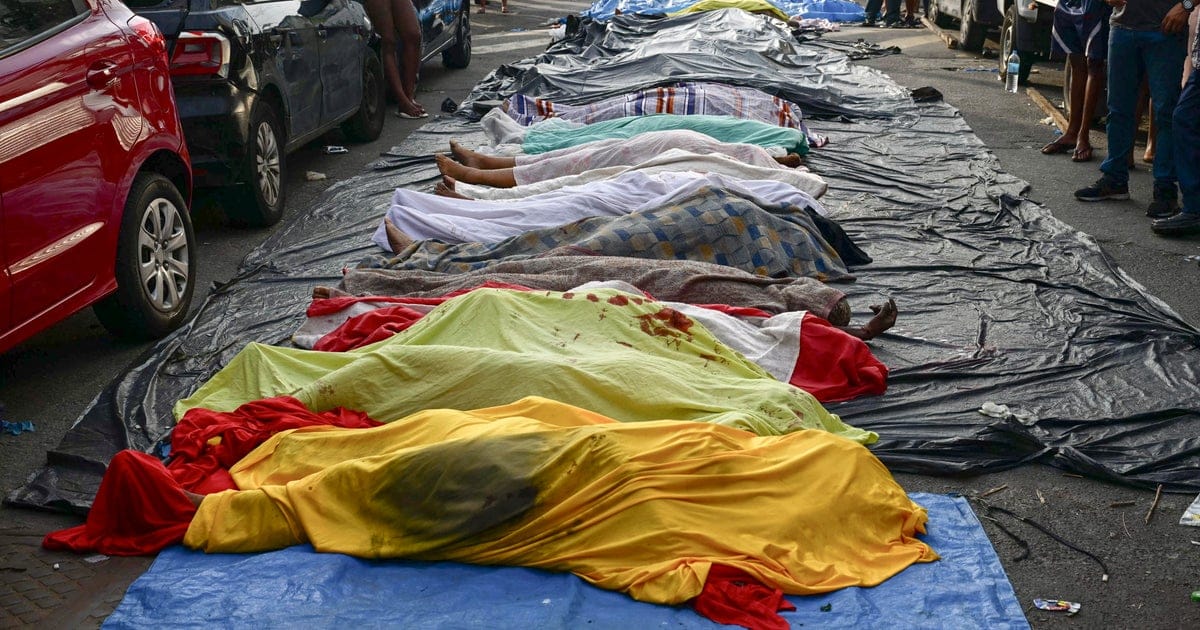
A police operation targeting a drug gang in several low‑income neighborhoods of Rio de Janeiro on Wednesday resulted in at least 119 fatalities, according to local authorities. The raid, described by officials as a large‑scale action against organized crime, quickly became the focus of national and international attention due to the high death toll and reports of extreme violence.
Security forces deployed dozens of armed units, including specialized tactical teams, to enter the favelas where the gang was believed to be entrenched. According to preliminary statements, the operation involved the use of firearms, tear‑gas canisters, and armored vehicles. While police claim that many of the victims were armed combatants, eyewitnesses and community members have reported that several individuals appeared to have been shot at close range, raising questions about the proportionality of force used.
Within hours of the raid, residents organized protests outside the precincts of the Rio state police, demanding accountability and an end to what they described as extrajudicial killings. Social media posts amplified accusations of executions and even a graphic claim of a decapitation, though officials have not confirmed such details. Government spokespersons emphasized that an internal investigation has been launched and that the operation was conducted in accordance with legal standards, while human‑rights organizations have called for an independent inquiry and urged authorities to protect civilians.
The incident adds to a pattern of contentious police actions in Brazil’s urban slums, where law‑enforcement agencies have increasingly adopted aggressive tactics to combat drug trafficking. Critics argue that such raids often exacerbate community tensions and can undermine public trust, while supporters contend that they are necessary to curb violent crime that has plagued the region for years.
As the investigation proceeds, the federal government has pledged to review operational protocols and consider reforms aimed at improving oversight. The outcome of this scrutiny could shape future security strategies in Rio and influence broader debates over the balance between public safety and human‑rights protections in Brazil.