Beaver Moon: 2025’s Closest Supermoon Illuminates the Evening Sky
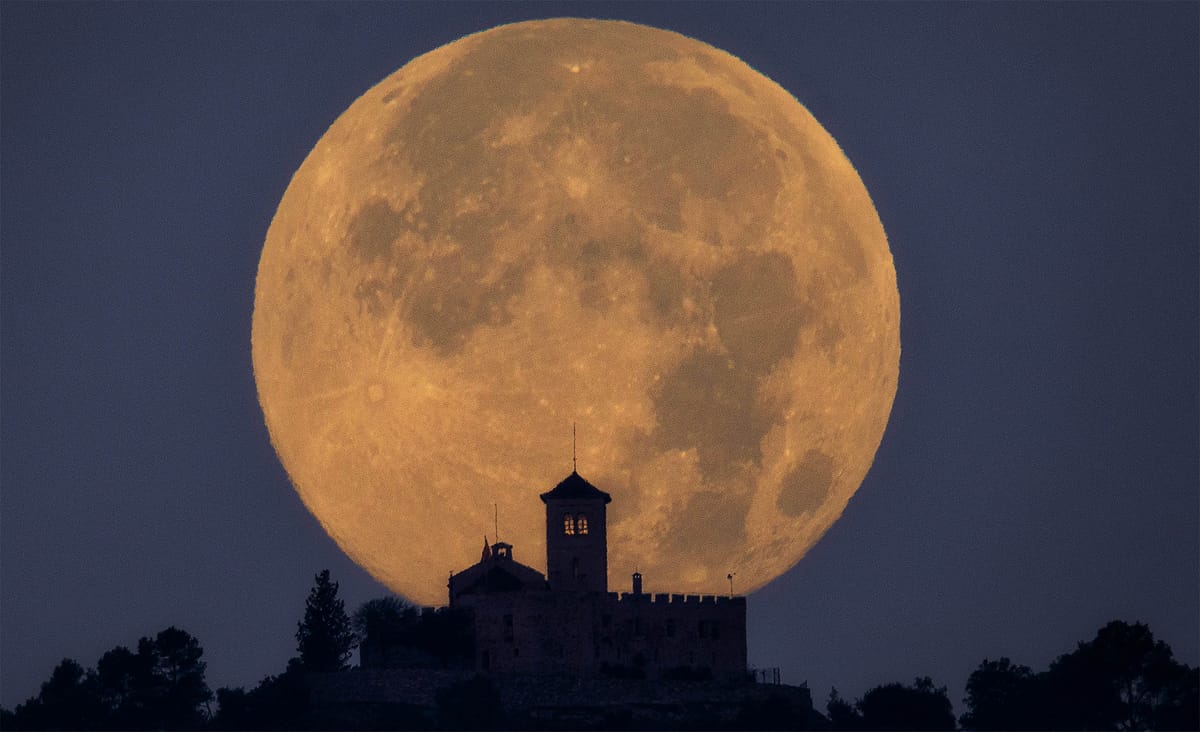
Residents across the Northern Hemisphere will have a rare visual treat this week as the so‑called “Beaver Moon” reaches its closest approach to Earth in 2025, creating a noticeably brighter and larger lunar disc. Astronomers describe the event as a supermoon, a term used when the full moon coincides with the moon’s perigee—the point in its orbit nearest to our planet—resulting in an apparent diameter up to 14 percent larger than an average full moon.
The phenomenon will be most visible after sunset on the eastern horizon, where the moon will rise higher and maintain its brilliance throughout the night. While the exact timing varies by location, most observers can expect the peak illumination to occur between 7:00 p.m. and 9:00 p.m. local time. The heightened brightness not only offers a stunning visual spectacle but also provides a practical advantage for nighttime activities such as wildlife observation, photography, and outdoor events.
Experts note that supermoons are not uncommon, occurring several times a year, but the 2025 Beaver Moon is distinctive for its proximity. According to generic astronomical data, the moon will be roughly 357,000 kilometers from Earth, compared with the average distance of about 384,400 kilometers. This reduced gap accounts for the increased luminosity and a slight boost in tidal forces, which coastal authorities are monitoring as a routine precaution.
Looking ahead, scientists anticipate that the supermoon will have minimal impact on daily life beyond the visual display and marginally higher tides. However, educators and planetariums are planning outreach programs to leverage the event for public engagement, encouraging people to learn about lunar cycles, tidal dynamics, and the cultural significance of the Beaver Moon, a name traditionally associated with the time when beavers prepare their lodges. As the night sky brightens, observers are invited to step outside, take note of the enhanced lunar glow, and reflect on the celestial rhythms that have guided human cultures for centuries.