Astronomers Spot Second Fastest Known Asteroid Orbiting Within Venus' Path
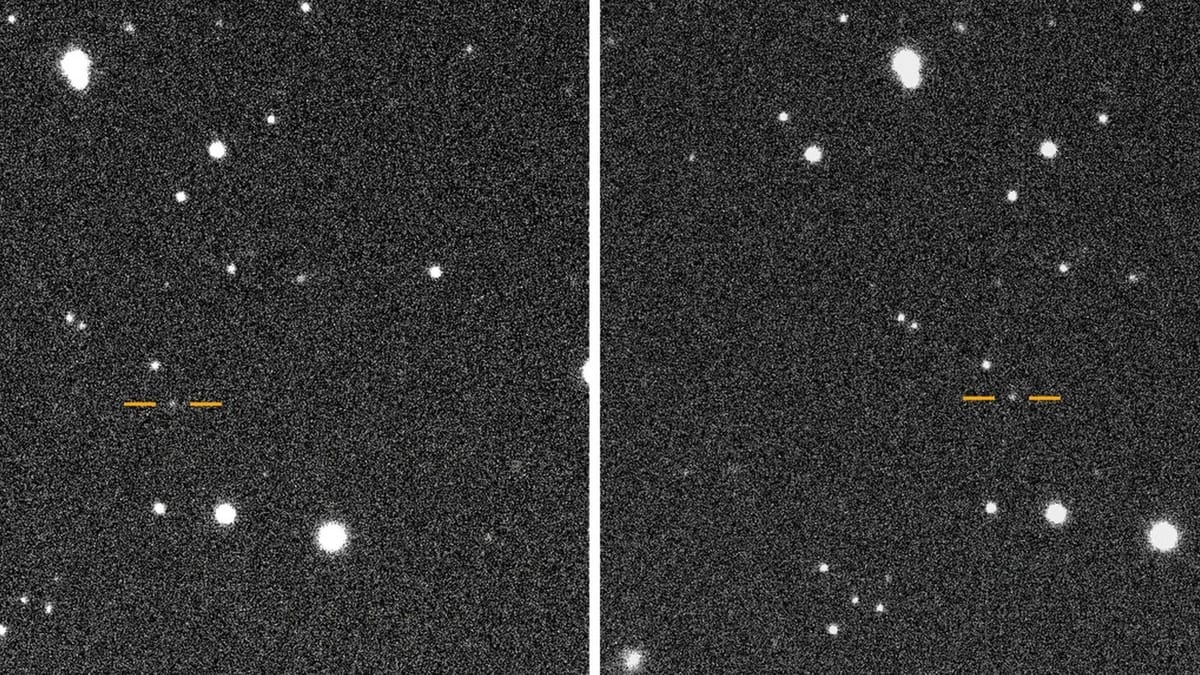
A team of astronomers announced the discovery of a new near‑Sun asteroid designated 2025 SC79, which completes an orbit around the Sun in just 128 days. The object's rapid motion makes it the second‑fastest asteroid known, trailing only the record‑holding 2021 PH27. The find was reported by a collaborative research group using data from a solar‑observing space telescope that can detect faint objects against the Sun's glare.
2025 SC79 follows an orbit that lies entirely inside the orbit of Venus, bringing it to within roughly 0.3 astronomical units of the Sun at perihelion. Its highly eccentric trajectory causes the asteroid to accelerate to velocities exceeding 80 km/s at closest approach, a speed surpassed by only a handful of known objects. Because such bodies spend much of their time near the Sun, they are difficult to detect with ground‑based observatories, and the discovery underscores the value of dedicated solar‑survey instruments for uncovering hidden members of the Solar System.
Scientists highlighted the importance of tracking fast‑moving near‑Sun objects, noting that their dynamics can shed light on the long‑term evolution of planetary orbits and the distribution of small bodies in the inner Solar System. "These asteroids experience extreme thermal and gravitational stresses, offering a natural laboratory for studying material strength and orbital migration," a planetary scientist familiar with the study said. While 2025 SC79’s orbit does not intersect Earth's path, researchers will continue to monitor its trajectory to assess any long‑term changes that could affect future impact probabilities.
The discovery adds to a growing catalog of so‑called Atira and Vatira asteroids, a class that remains poorly understood due to observational challenges. Ongoing surveys and planned missions, such as the upcoming Solar Probe Plus extension, aim to map additional objects in this region. Continued observations of 2025 SC79 will help refine models of near‑Sun asteroid populations and improve predictions of their behavior over astronomical timescales.