AI Generates First 100‑Billion‑Star Simulation of the Milky Way
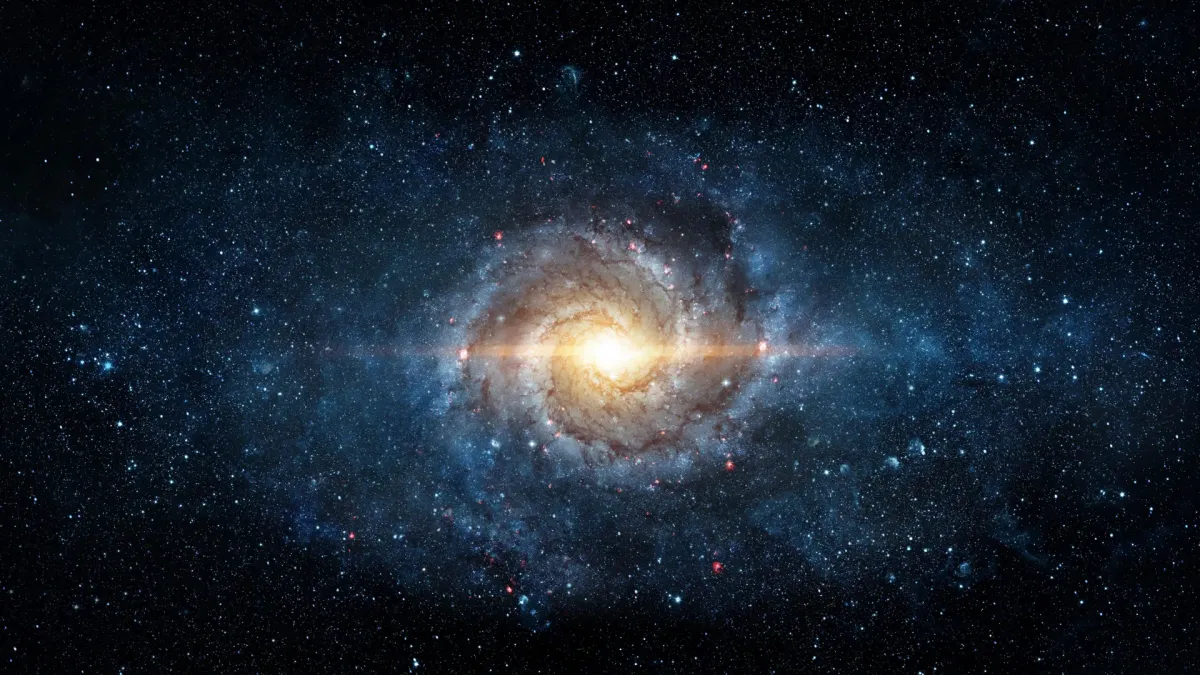
Researchers at Japan's RIKEN Center for Interdisciplinary Theoretical and Mathematical Sciences, together with collaborators from the University of Tokyo and other institutions, announced the creation of a computer model that simulates the Milky Way galaxy with a resolution of 100 billion stars. The simulation, described as the first of its kind to reach this level of detail, was produced using artificial‑intelligence techniques that accelerate the calculation of gravitational interactions.
The team employed a deep‑learning framework that was trained on existing lower‑resolution galaxy models and then used to extrapolate the dynamics of a full‑scale stellar population. The calculations were run on a high‑performance computing cluster equipped with thousands of GPU nodes, allowing the model to evolve the system over several hundred million years of simulated time. By representing each star individually, the model captures fine‑grained structures such as spiral arms, stellar streams, and the central bar with unprecedented fidelity.
Previous Milky Way simulations have typically limited the number of particles to a few hundred million, requiring researchers to treat groups of stars as single particles. The new 100‑billion‑star approach reduces this abstraction, offering a more realistic view of how the galaxy’s mass distribution influences star formation, orbital migration, and the interaction with satellite galaxies. Such detail is expected to improve predictions of the Milky Way’s past encounters with dwarf galaxies and to refine estimates of dark‑matter density in the galactic halo.
Independent experts described the work as a significant step toward bridging the gap between theoretical models and observational data from missions such as Gaia. Industry analysts noted that the AI‑driven methodology could be applied to other large‑scale astrophysical problems, including simulations of galaxy clusters and cosmological structure formation. The researchers plan to make the simulation data publicly available, enabling further study of galactic dynamics and supporting future investigations into the origins of the Milky Way.